NEWS
Clients and Grantees Survey Results

Greenwood Place conducted a survey of our clients and grantees in June 2020. The results are linked here.
Briefing No. 21

WHAT WE'RE READING
On the Greenwood Place bedside table
Caste: The Lies That Divide Us
In Caste, Pulitzer-Prize winning author Isabel Wilkerson sets out to understand American hierarchy, which she compares with two of the best known caste systems in the world: that of India, and of Nazi Germany. Wilkerson uses a powerful mingling of story, research, and insight to shine a light on America's artificial racial divisions. “The hierarchy of caste is not about feelings or morality. It is about power - which groups have it and which do not”.

A LIFE ON OUR PLANET
One man has seen more of the natural world than any other. This unique feature documentary is his witness statement. In his 93 years, David Attenborough has visited every continent on the globe, exploring the wild places of our planet. He reflects upon both the defining moments of his lifetime as a naturalist and the devastating changes he has seen. This is a powerful first-hand account of humanity's impact on nature and a message of hope for future generations.

EARTHRISE
Amanda Gorman's stunning performance of her poem “Earthrise” was, for us, a highlight of the global launch of TED Countdown a few weeks ago. The entire Countdown launch event is now online and you can dig into ideas and potential solutions to climate change at your leisure.

THE RIGHTEOUS MIND
This month we revisited Jonthan Haidt's tour de force examination of human polarisation, The Righteous Mind: Why Good People Are Divided By Politics and Religion. It has helped us understand why intellectual honesty is so elusive and why our divisions run so deep. It outlines steps we can take to overcome the antipathy that characterises so much of modern politics, increase our wisdom and show a bit more compassion to those we disagree with.

ENDING HUNGER
Science must stop neglecting smallholder farmers.
CANADIAN RESEARCHERS GAVE THOUSANDS OF DOLLARS TO HOMELESS PEOPLE
The results defied stereotypes.
EVENTS
Our next community roundtable is an important and timely one. We are delighted to host Jacqueline Novogratz and Jawad Aslam later this month for a conversation about building communities in a time of division.
AND FINALLY...
Huge congratulations to Greenwood Place community member Laura Winningham of City Harvest, awarded an OBE for services to the community in London during the
Covid-19 response for helping to feed the most vulnerable.
Briefing No. 20 - Summer Edition

WHAT WE'RE READING
On the Greenwood Place bedside table
The Good Ancestor
The need to draw on our capacity to think long-term, writes Roman Krznaric, has never been more urgent, whether in areas such as public health care (planning for the next pandemic on the horizon), to deal with technological risks (AI-controlled lethal autonomous weapons), or to confront the threats of an ecological crisis whether nations sit around international conference tables, bickering about their near-term interests, while the planet burns and species disappear.
At the same time, businesses can barely see past the next quarterly report. What can we do to overcome the tyranny of the now?
A HEALTHIER RELATIONSHIP WITH HISTORY
"For me it begins with truth-telling. If you don't know your history, you can't really begin to understand what your obligations are, what your responsibilities are, what you should fear, what you should celebrate, what's honourable and what's not honourable."
We included a link to Bryan Stevenson's recent New Yorker article in Briefing 19. However, we wanted to return to Bryan's thinking again, and found this conversation about truth and reconciliation in the US particularly rich.

ART & FREEDOM
"Freedom is a pretty strange thing. Once you've experienced it, it remains in your heart and no-one can take it away." Ai Weiwei
Ai Weiwei is China's most famous international artist, and its most outspoken domestic critic. Against a backdrop of strict censorship and an unresponsive legal system, Ai Weiwei: Never Sorry tells the story of a dissident who inspires global audiences and blurs the boundaries of art and politics.

HOW TO INNOVATE
"Innovation is not an individual phenomenon, but a collective, incremental and messy network phenomenon."
The latest book by Matt Ridley (author of the Rational Optimist) is a collection of stories about innovation - how inventions turn into things of practical and affordable use to people.
Innovation, Ridley argues, is always a collective, collaborative phenomenon, involving trial and error, not a matter of lonely genius. The collaborative, iterative development of social good is fundamental to Greenwood Place's work, and to the work we seek to encourage across our community.
ROCK DUST AS A CLIMATE SOLUTION
Spreading rock dust on farmland - a practice that is compatible with existing farming techniques - could suck billions of tonnes of carbon dioxide from the air every year, according to the first detailed global analysis of the technique.

THE TECH NONPROFIT PLAYBOOK
Our friends at Mulago shared this guide - created by tech for good investor, Fast Forward - to creating and scaling organisations that apply tech to social problems. It's full of great nuggets.
EVENTS
Our next roundtable will be a cross-continent conversation on wellbeing and COVID recovery. Dena Batrice, Chris Underhill MBE, and Mark Williamson will help us to explore how we can protect and promote mental health at this pivotal time for communities. Give us a call if you would like an invitation.
AND FINALLY...
We're delighted to announce that Greenwood Place has become a certified B Corp. B Corps are companies that use the power of business to solve social and environmental challenges. We are proud to be part of the growing community of B Corps aiming to redefine success in business.
Find our more about the B Corp movement here.

Briefing No. 19

WHAT WE'RE READING
On the Greenwood Place bedside table
We have drawn so much wisdom from Jacqueline Novogratz’s new book: Manifesto for a Moral Revolution - a huge amount that is relevant for these times.
We hope that you will find time to read it, but in the mean time, here’s a taste:
“Whatever you aim to do, whatever problem you hope to address, remember to accompany those who are struggling, those who are left out, who lack the capabilities needed to solve their own problems. We are each other’s destiny. Beneath the hard skills and firm strategic priorities needed to resolve our greatest challenges lies the soft, fertile ground of our shared humanity. In that place of hard and soft is sustenance enough to nourish the entire human family.”
WARRIORS OR GUARDIANS?
Bryan Stevenson talks in the New Yorker about what it takes to build healthy relationships between the police and the community they serve. About the training that’s needed to de-escalate conflict, to deal with individuals suffering from mental illness, to work in situations of anger and frustration. Of the US police force he says, “We have created a culture where police officers think of themselves as warriors, not guardians.”
We also spoke to our partners at St Giles Trust's SOS Project - a Greenwood Place community member which provides intensive support for young people at risk of involvement in gangs, youth violence & the criminal justice system. They recommend watching Baratunde Thurston’s profound, and often hilarious, 2019 TED talk, which explores the phenomenon of white Americans calling the police on black Americans who have committed the crimes of... eating, walking or generally "living while black."
WHAT HAPPENED WHEN IT ALL STOPPED
As millions around the world shelter at home, the smog melts away, the birds sing, and the waters run clear. What if we used this moment in our lives and in history as an opportunity to jumpstart the rebirth of our planet? Dr Jane Goodall narrates a beautifully animated poem written by Tom Rivett-Carnac.

HUMANKIND - A HOPEFUL HISTORY
Rutger Bregman’s “Humankind“ makes a new argument - that it is realistic as well as revolutionary to assume that all people are good. Bregman argues that 'the instinct to trust rather than distrust, cooperate rather than compete, has an evolutionary basis that goes back to the beginning of our species'.
LISTENING AS A DUE DILIGENCE TOOL
Our community members Evenlode Investment Management have been working with The Forest People’s Programme to put together a report that highlights the importance of listening as a core part of due diligence and risk assessment processes - and how investors can better protect communities and habitats affected by global supply chains.
BUILDING BACK BETTER
For those who didn’t join us for our community screening a couple of weeks ago, its definitely worth watching Damon Gameau’s documentary, 2040, which lays out a compelling and inspiring vision of what could be - exploring solutions to planetary issues that already exist.

A STEP TOWARDS THE END OF PLASTIC?
Globally around 300 million tonnes of plastic is made from fossil fuels every year. Plans are afoot in the Netherlands to make plastic, sturdy enough for bottles, that will decompose in just a year, and that will be be made from plant sugars rather than fossil fuels.
AND FINALLY...
“I’m not a shame person, but I want future generations to look back on us and say, ‘Look how hard they tried,’ not ‘Look at how blind they were.’”
Jacqueline Novogratz, interviewed on the On Being Podcast.
If you would like to talk to us about how to help those working to deal with the social and economic fall-out of this global pandemic, or the opportunities it presents to protect and restore our shared environment, please call us.
Briefing No. 18

We wanted to bring you a special edition of the Greenwood Place Briefing.
At a time of alarm, this edition focuses on compassion and hope.
At Greenwood Place we've been surrounded by small kindnesses and human connections this week - a WhatsApp group in Rebecca's village sourced walnut oil for a disabled child's life-saving diet, a friend in London offered a home to a family separated for two weeks by quarantine rules.

HOW WE'RE LISTENING
We're listening to a number of charities and networks as they face into the crisis and are considering ways that philanthropy might usefully respond - both in the long and short term.
If you would like to talk to us about how to help those working to deal with the social and economic fall-out of this global pandemic, whether locally or globally, please call us.
WHAT WE'RE READING
On the Greenwood Place bedside table
As Greenwood Place adjusts to remote working and long distance conversations with our community, we’ve also been returning to books that sustain.
The late Viktor Frankl is best-known for his indispensable 1946 memoir Man’s Search for Meaning - a meditation on what the horrific experience of Auschwitz taught him about the primary purpose of life: the quest for meaning, which sustained those who survived. For Frankl, meaning came from the realisation that whatever they took they could not in the end remove his choice of how he responded. “Between stimulus and response there is a space. In that space is our power to choose our response. In our response lies our growth and our freedom”.
The Book of Joy (see also Briefing No. 5) is a beautiful book that documents a week of conversations between the Dalai Lama and Archbishop Desmond Tutu in 2015 at the Dalai Lama’s home in Dharamsala. The two men look back across their lives and reflect together about finding calm and joy in a world filled with suffering.

A PARADISE BUILT IN HELL
Rebecca Solnit, interviewed by Krista Tippett on the On Being podcast, discusses why disasters are opportunities as well as oppressions, how neighbours and friends rediscover the powerful engagement and joy of genuine altruism, grassroots community (even digitally), and meaningful work. It is a fresh, deep optimistic look at human nature. As Solnit says: “There is so much work for love to do in the world right now.”
GRATITUDE
Every evening at 8pm, people across Paris clap for the healthcare workers. It's a trend: the UK will clap for carers at 8pm on Thursday this week. Let’s hope it spreads.

PRESENT CONCERNS: CS LEWIS
C.S. Lewis, writing in the early 1940s, feels relevant now: “How are we to live in an atomic age?”… do not let us begin by exaggerating the novelty of our situation. Believe me, Dear sir or madam, you and all whom you love were already sentenced to death before the atomic bomb was invented… the first action to be taken is to pull ourselves together.
If we are all going to be destroyed by an atomic bomb, let that bomb when it comes find us doing sensible and human things—praying, working, teaching, reading, listening to music, bathing the children, playing tennis, chatting to our friends…. — not like frightened sheep thinking about bombs. They may break our bodies (a microbe can do that) but they need not dominate our minds.”

BUILDING COMMUNITY AT A TIME OF ISOLATION
Acumen Fellows are working now in 7 countries - building community, crossing barriers and creating change. In the UK , applications for the Acumen Fellowship are open until April 5th. Do you have what it takes? Apply here, or pass the link along to someone you know.
AND FINALLY...
In parting, we wanted to share something that one of our partners, Dr Raj Panjabi, CEO of Last Mile Health said to us last week.
“If we learned one thing from the Ebola crisis in Liberia, it's that humans are not defined by the conditions they face but how they handle them.”
The context was a discussion of Last Mile Health’s plans to provide community health support to all those who need it - including those requiring maternal healthcare, malaria medication and vaccinations - during the coming spread of COVID19 in Liberia, Ethiopia and Malawi.
Briefing No. 17 - India Special
"Travelling to India as part of the Greenwood Place community has led me to think about my philanthropy in a new, and more holistic, way. Thank you."
Greenwood Place Community Member

This month, a group of 16 Greenwood Place community members came together in India to explore this question: what does it take to make lasting, positive change.
Over 5 days we visited local leaders from all walks of life with our partners at Leaders’ Quest. We spent time in smart restaurants, in one-room homes, in slums, villages and forests. We met activists, teachers, entrepreneurs and elders.
We put together this special edition briefing to share a little of what we learned.

CHOICES AND CHANCES
Priyanka (name changed) is 18 and a whip smart, state-level athlete from the beautiful, rural state of Haryana.
Priyanka's parents promised that she would be allowed to continue her studies if she got married, but her new family beat her and kept her home. When she ran out of every option she could think of, Priyanka caught the train to Mumbai.
Deepali Vandana and the Urja team picked Priyanka up at the main train station. They are providing her with temporary housing, counselling and support back into education.
A TrustLaw poll ranked India as the fourth most dangerous country in the world for women and UNICEF estimates that almost 20% of Indian women aged 20–24 are married by age 15 - but Urja’s work and their outspoken advocacy on behalf of women and girls have changed both police attitudes and individual family decisions - and their work deeply affects the lives of individual girls.

CLEAN WATER & CARBON CREDITS
Spring Health is a social business that cleans and provides water to the very poor, The CEO, Kishan Nanavati is thoughtful and determined. He serves 28,000 households with clean water - selling carbon credits as well as water to create a financially sustainable model than keeps prices as low as possible.
Spring Health's network of local entrepreneurs increase their income by over 50%, and water-related sickness reduces amongst its customers by an estimated 29%.
We loved Spring Health’s marketing method - performing e-coli tests on drinking water door to door and showing families the bacteria in the water that their children are drinking…

TRANSFORMING EDUCATION OUTCOMES
“We play all our cards to get our programme started with teachers. And then the teachers see the change in their students and that does the rest.”
Pankaj Sharma from Transform Schools is committed to turning around India's secondary education system, at speed and at scale.
India is projected to have the largest workforce in the world by 2027 - a huge demographic opportunity. Great strides have been made over the past decade to get millions of children into primary school. However, just 7 out of 10 students in grade 8 are able to read at a grade 2 level.
Transform’s combination of intense remedial education, plus deep school and community engagement is changing this for 2.4 million students already - with 70% of costs covered by government. Their remedial programme sees students advancing 1.7 - 2.5 academic years. We were blown away.

RETHINKING HEALTHCARE
“What really struck us … was the disengagement of family members even though they cared most about the patients. We saw that you could turn areas of pain, anxiety and suffering into areas of learning. You could bring the family into the centre of care. …It was an absolute ‘no-brainer’”
Syed Alam, Co-Founder, Noora Health
India has about 4 million skilled healthcare professionals to serve a population of 1.36 billion – that’s about 29 per 10,000 people. Patients and their families often wait for hours, if not days, in public hospitals which are overcrowded and understaffed.
Noora Health trains family members as caregivers who can provide effective health care support to the people they care for. This simple innovation has seen a 71% decrease in 30 day post surgical complications, a 23% decrease in hospital preventable re-admissions and a 42% decrease in newborn readmissions.

CONSERVATION & DIGNITY
“When you talk about commons, you have to talk about equality. This is about ordinary people doing extraordinary things… villagers who are by their very nature systems thinkers and long term planners. We see village people becoming heroes every day" Jagdeesh Rao, CEO and Founder of FES
FES enables the rural poor to secure legal rights to access, improve and manage their common lands, combining resource management and conservation with improving livelihoods. They are working with more than 20,000 villages, protecting 6.24 million acres of ‘commons’ and benefiting 10.7 million rural people.
The extraordinary numbers however, don’t give you a sense of the dignity that FES’s radical partnership approach provides to the individual villagers who they work with and the strength of their work to protect and restore land. Our day in the forest with FES will stay with all of us for a very long time.
We saw the power of strong communities throughout our week together.
And we learned over and over again that there is nothing inevitable about injustice and inequality.
EVENTS AT GREENWOOD PLACE
Greenwood Place will be at the Skoll World Forum from 31 March - 2 April. We’ll be talking international philanthropy and cultural complexity over breakfast with Jagdeesh Rao, Safeena Husain and Deval Sanghavi. And our partner Transform Schools will also be launching results of their RCT with J-Pal. You can book tickets for the J-Pal/Transform event here. We hope to see you there!
We’re building our programme for teach-ins and roundtable discussions in 2020. Let us know what you’d like to learn about. And, in the mean time, please put 3rd June in your diary for breakfast with James Thornton, Founder of Client Earth.

Briefing No. 16 - Christmas Edition
We wish you all Happy Holidays, and look forward to even greater, collective, impact across our community in 2020.

WHAT WE'RE READING
Greenwood Place’s Christmas Bookshelf
As a team of curious generalists, we loved Range by David Epstein. Epstein argues for developing broad interests and skills, thinking broadly and embracing diverse perspectives. He suggests it's the way to thrive in most fields - especially those that are complex and unpredictable. People who think broadly and embrace diverse experience and perspectives will increasingly thrive.
EDUCATION AND GRADES
"The most damaging thing you learned in school wasn't something you learned in a specific class. It was learning to get good grades". Paul Graham reflects on whether hacking bad tests is becoming less important in grown-up life. And whether this might ultimately have a beneficial effect on education as well.

THE MADNESS OF INDUSTRIAL FOOD PRODUCTION
We're transfixed and horrified by The Omnivore's Dilemma, Michael Pollan's terrifying romp through the US food production industry.

HOW WE CAN TURN THE TIDE ON CLIMATE
"If we are to address the climate crisis, it's going to take all of us. But we need to break out of our silos, and work with each other in unique ways," said Chris Anderson of TED, at the launch of Countdown, an initiative that will spread and activate ideas to combat climate change.
WHEN INVESTMENT FAILS THE PEOPLE WHO NEED IT MOST
Laura Hattendorf of Mulago Foundation - a friend and colleague of Greenwood Place through the Big Bang Philanthropy network of collaborative, impact driven donors - questions whether enough impact investors are truly making decisions with an impact mindset. Many investors say poverty or climate change are the kinds of problems they want to help solve, but too few investments are getting made. Maybe the deal is too small, too early, too late, too risky. There are always a million reasons not to do the deal...

HARMONY
After spending a couple of days last week with Patrick Holden (Founder of the Sustainable Food Trust) talking about how our tendency to ignore the way that nature works is affecting our health and our environment, Rebecca dusted off her copy of HRH The Prince of Wales and Tony Juniper's "Harmony" to re-read over the holidays.
Harmony is a brilliant and broad-ranging book, which considers how we might approach the way we do things by looking at how Nature herself operates, not least when it comes to food and farming, and what happens when we separate what we ARE from what we do.
MUSIC IN EXILE
Filmed partly in refugee camp and on the war-ravaged streets of Timbuktu and Gao, Johanna Schwartz's miraculously hopeful documentary delivers a vibrant testimony of resilience under oppression - and some cracking tunes.

THE ART OF PAYING ATTENTION
Before he was known as a poet and philosopher, David Whyte lived another life as a marine zoologist and spent almost two years living in the Galapagos Islands observing animals, birds and landscapes.
"I began to realise that my identity ... depended on how much attention I was paying to things that were other than myself." Our experience is that this paying attention is sometimes the beginning of connecting with others, or with what's around us, and that ability to listen which sits at the hear of impactful philanthropy - something that Whyte calls "the conversational nature of reality."
AND FINALLY... DA VINCI'S BRIDGE
Leonardo designed a revolutionary new bridge 500 years ago that never saw the light of day. It incorporates techniques that were re-imagined and actually used by architects 300 years later. Researchers at MIT just built the model, see here.
OUR CHRISTMAS GIFT TO THE GREENWOOD PLACE COMMUNITY
In time-honoured tradition, as 2019 draws to a close, Greenwood Place is planting trees as our thank you to our clients, grantee partners and the entire community. We wish you all a very Happy Christmas, and look forward to even greater, collective, impact across our community in 2020.

Briefing No. 15
Gender bias, problematic alternatives to plastic, and the power of listening.

WHAT WE’RE READING
On the Greenwood Place bedside table
Invisible Women
Caroline Criado Perez's extraordinary expose of gender bias highlights - over and over - the ways that women are "forgotten" on a daily basis. Cars are designed around the body of "Reference Man", so although men are more likely to crash, women involved in collisions are nearly 50% more likely to be seriously hurt. Women in Britain are 50% more likely to be misdiagnosed following a hear attack: heart failure trials generally use male participants. Read it.

PLASTIC: IT'S COMPLICATED
Our community member Evi, whose philanthropy focuses on marine pollution, sent us this article. Plastic has a huge carbon footprint, but alternatives are also problematic. It's not a simple fix.

LISTENING TO, AND TELLING, STORIES
Psychoanalyst Stephen Grosz thinks that novelist Karen Blixen had a point when she wrote: "All sorrows can be borne if you put them in a story about them." Over the course of his 25-year career he encouraged his patients to do just that. Read more here.
Melinda Gates’s recently released book, “The Moment of Lift” is a paean to the power of listening to stories. Something powerful happens, she says, when you ask a woman to tell her story. And sometimes, the most powerful statement of support we can offer is the one we make by listening.
Much of our work at Greenwood Place is about listening, trying to uncover the stories that show us what can work. These two books remind us how very difficult it is for us to understand our own stories let alone those of others.

BUSINESS GETTING BETTER
180 of the US’s biggest corporations have recently pledged to focus on increasing ‘stakeholder’ value, including employees, communities and the public good. And thousands of companies are already signed up to this agenda through the B Corporation movement. They include Patagonia, Danone and Lombard Odier.

NORWAY IS PAYING GABON TO PROTECT ITS FORESTS
As part of the Central African Forest Initiative, a 10-year deal announced in September, Norway will pay $150 million to Gabon to battle deforestation and reduce greenhouse gas emissions.
KNIFE SKILLS
We loved Knife Skills, which documents the journey to build a world class French restaurant in the US staffed almost entirely by men and women just out of prison. It reminded us of the success of the UK’s Clink restaurants - a charity running restaurants staffed by inmates that operate in four UK prisons. Clink graduates have a reoffending rate of 11% (37% of adults released from custody have reoffended within a year).
ROTTERDAM'S ZERO WASTE PLANNING
Rotterdam has mapped out a bold vision to become a fully circular economy by 2050, a move that could create 7,000 jobs within a decade. The city wants to become a ‘living laboratory’ in which to test new ideas for a waste-free future.

GOOD THINGS HAPPENING FOR OUR PARTNERS
Stephen Hale, of Refugee Action, was awarded UK Charity CEO of the Year; Safeena Husain of Educate Girls’ TED Talk went live (watch it here) and CAMFED’s alumnae programme, CAMA won a UN Global Climate Action award.
AND FINALLY... THE DANGER OF A SINGLE STORY
More on the story theme. Our lives, our cultures are composed of overlapping stories. Chimamanda Adichie tells the story of how she found her authentic cultural voice and warns that if we hear only a single story about another person or country we risk a critical misunderstanding. Watch her TED Talk here.
EVENTS AT GREENWOOD PLACE
Professor Muhammad Yunus is coming to Greenwood Place to discuss what it takes to achieve real change; Jacqueline Novogratz will be joining us in a few weeks time to talk through her vision for a new generation of global leadership; and our January Community Trip to India is getting closer.

Briefing No. 14
This month we find out what the 7 billion people on this planet do, environmental responsibility in business with Yvon Chouinard and other important global trends in health, re-wilding and renewables.

WHAT WE'RE READING
On the Greenwood Place bedside table
"The Zen master would say if you want to change government, you have to aim at changing corporations, and if you want to change corporations, you first have to change the consumers. Whoa, wait a minute! The consumer? That's me. You mean I'm the one who has to change?”
In his engaging and readable memoir, Let My People Go Surfing: The Education of a Reluctant Businessman, Yvon Chouinard, Founder of Patagonia, talks about the outdoors and the journey he took to build one of the world’s most intentionally environmentally responsible companies.

GLOBAL HEALTH: INDIA CUT MALARIA IN HALF IN 2018
India reports an estimated 5.1 million malaria cases in 2018 compared to 9.6 million in 2017.

RENEWABLE ENERGY: HOW NORWAY IS INVESTING ITS MONEY
The stated aim of the world’s largest sovereign wealth fund is to ensure responsible long-term management of the revenue from Norway’s oil and gas resources in the North Sea so this wealth benefits both current and future generations.
Toward that end, Norwegian MPs have decided to divest the country’s $1 trillion sovereign wealth fund from oil and gas exploration firms and invest more in renewable energy.
WE CAN PREVENT CERVICAL CANCER. DO WE HAVE THE WILL?
In 2018, cervical cancer killed more than 311,000 women. We could save most of them with straightforward and affordable interventions.
WHAT DO 7 BILLION PEOPLE DO?
No business or government can have more customers than the world's population. So how do 7 billion people spend their time?
AUSTERITY, WELFARE CUTS & THE RIGHT TO FOOD
Greenwood Place advisory board member, and board member of Human Rights Watch, Catherine Zennström, shared HRW’s recent research report on food poverty in the UK.
As the 5th largest economy in the world with public spending at 39% of GDP, food poverty in the UK can be fixed, but it will require legislative changes to allow struggling low income families to meet their basic needs.

TWO THANK YOUS
Thank you to the Environmental Funders Network for inviting us to visit the Knepp Estate. If you didn’t read “Wilding” by Isabella Tree (see Briefing no. 11) we recommend both the book and a visit to Knepp, one of the UK’s largest wild land projects and a fascinating place.
And, a very big thank you to our clients and grantees for completing our “Two Years of Greenwood Place” survey. We’ve posted the results online here. Feel free to take a look. We are using your feedback to adapt and improve how we deliver our work and how we support you. Please feel free to check in with us on what we are working on.
EVENTS AT GREENWOOD PLACE
If you'd like to join us to talk investing for impact and climate resilient agriculture with Willy Foote, Founder & CEO of Root Capital in September, or if you would like to be part the January 2020 Greenwood Place Community trip to India, please let us know. We'd love to include you.

Greenwood Place Survey Results
Greenwood Place conducted a survey of our clients and grantees to mark the end of our second year in business.

Briefing No.13
Moral Revolutions, climate justice and AI for good are just a few of the things we are reading about this month.
WHAT WE'RE READING
On the Greenwood Place bedside table
Mary Robinson, former president of Ireland and former United Nations' high commissioner for human rights, is a powerful voice for gender equality, human rights, and social justice.
In "Climate Justice", she gives a platform to women whose lives have been drastically affected by climate change and listens to the way that their communities have been adapted and changed. It's an insightful and optimistic book, and a fascinating read.

MORAL REVOLUTION
Spiritual traditions across the world remind us that the happiness that comes from accumulation is fleeting. There is another kind of happiness, let's call it joy, that comes with a life of deep commitment. "Happiness comes from accomplishments; joy comes from offering gifts. Happiness fades; we get used to the things that used to make us happy. Joy doesn't fade." New York Times columnist and author David Brooks calls this the second mountain.

NEUROSCIENCE NEWS
Neuroscientists are telling us that people don't become fully adult until they are 30. What implications might this have for criminal justice systems and society as a whole?

GLOBAL MENTAL HEALTH
Sonal and Rebecca spent a few days in Uganda with mental health focused charity Strong Minds.
After a 12-week course of group therapy, 90% of previously depressed group participants show strong gains in their physical and mental health as well as their employment status and ability to save some of their income (both pre and post treatment measures are administered to internationally recognised standards).
For decades, many people - in both the Global North and the Global South - believed that depression was a uniquely western phenomenon. They were wrong. In fact, the single largest cause of disability worldwide is mental illness.
Tina Rosenberg of The Guardian takes a closer look at how depression is affecting those in the poorest countries.

WORLD POVERTY CLOCK
The World Poverty Clock provides real time poverty estimates for almost every country in the world in a compelling visual format. Take a look.
AI FOR GOOD
One of our community members, Educate Girls, is using artificial intelligence to understand better how to locate and support out-of-school girls in rural India.
We don't see much AI for good coming through the door yet at Greenwood Place. How can AI for good scale?

THE END OF PLASTIC WASTE
MacRebur, the company that uses plastic rubbish that would otherwise go to landfills to surface roads, has opened its first factory.
Briefing No. 12
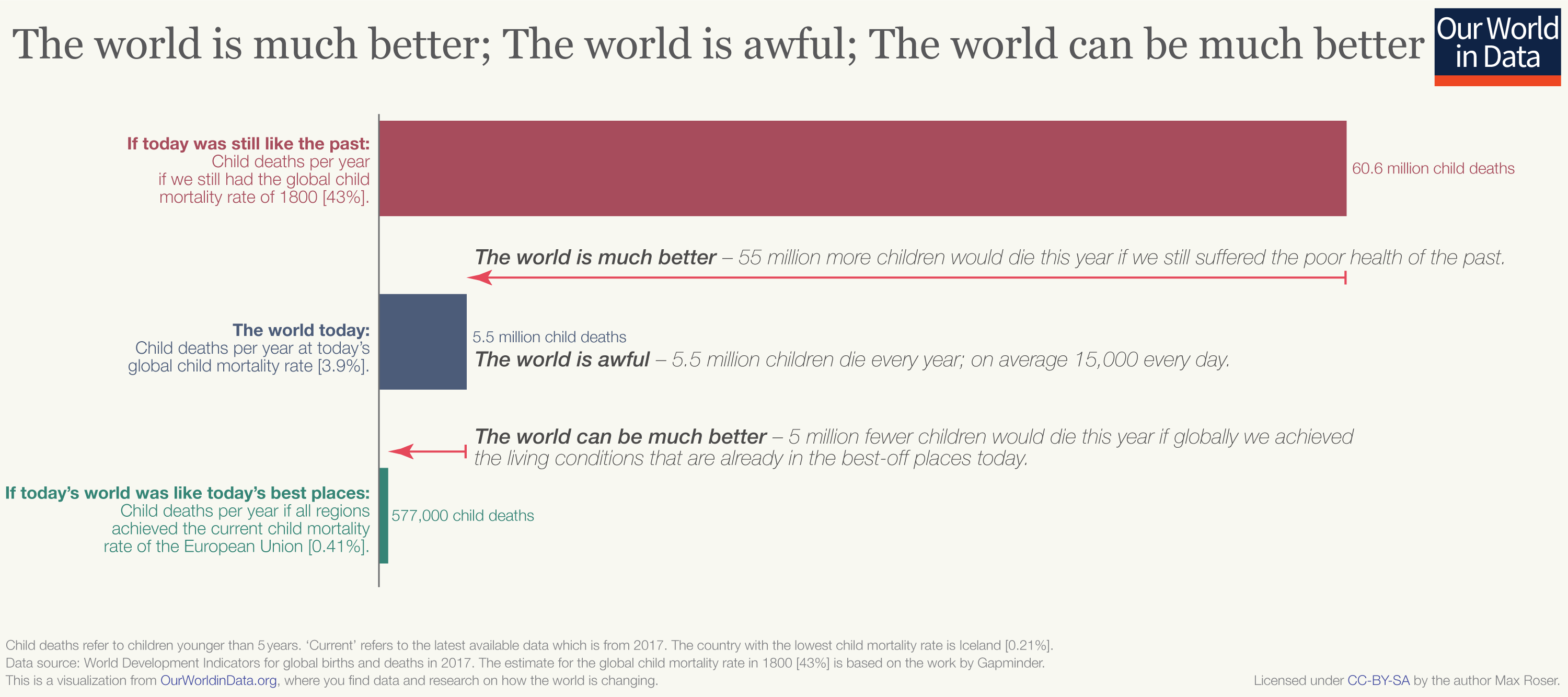
The World is much better, the world is awful; the world can be much better.

WHAT WE'RE READING
On the Greenwood Place bedside table
“I think it’s one of the most useless questions an adult can ask a child - What do you want to be when you grow up? As if growing up is finite. As if at some point you become something and that’s the end.” Michelle Obama
Most of the team at Greenwood Place have been listening to Michelle Obama’s “Becoming” on audiobook over the past few weeks. It’s been a pleasure. LISTEN HERE
HOW ICELAND GO TEENS TO SAY 'NO' TO DRUGS
Curfews, sports, and understanding kids’ brain chemistry have all helped dramatically curb substance abuse in the country, and the model rolled out at national scale in Iceland is now being adopted by cities across Europe and beyond. More here:
OUR WORLD IN DATA
The World is much better, the world is awful; the world can be much better.
Perhaps all three statements are true. Click on the link below to see research and interactive data visualisations to understand the worlds largest problems.
PEAK CAR
We’re fascinated by micro-mobility. In the City of London, bikes are now the dominant vehicle during rush hour, and congestion has fallen more than 40% since 1999. App-enabled scooters and bikes might prove to be all of 1. an unregulated, VC-funded nuisance; 2. the beginning of truly clean air cities and 3. a signal of global, declining car sales to come. Have we reached peak auto ?
RWANDA's CLOSING GENDER GAP
We’ve been enjoying the BBC World Service’s “ My Perfect Country” series, which searches the world to find countries doing one thing so well that their innovation should form part of an amalgam “perfect country”.
Series 3 opens by looking for the best place to be a woman and, perhaps surprisingly, chooses Rwanda.

TOP TEN TECHNOLOGIES
The SpaceX capsule took to the skies this month. What’s next? Bill Gates writes here about his top ten breakthrough technologies:
ONE MORE THING #ReclaimSocial
A viral campaign from charities to ‘reclaim social media for good’ has inspired thousands of positive messages on Twitter and other social networks
A campaign to ‘reclaim social media for good’ went viral this week, with thousands of people, charities and other social organisations calling for more positivity on social media.
Under the hashtag #ReclaimSocial, the movement trended on Twitter, and has already reached more than 14 million people. See the campaign here.


Briefing No. 11: The Christmas Edition
Social welfare for the 21st century, wilding, the funnel of human experience and a forest of fruit trees

WHAT WE'RE READING
On the Greenwood Place bedside table
We are planning to re-read Isabella Tree's: Wilding: The return of nature to a British Farm over the Christmas holidays.
Wilding tells the story of the pioneering rewilding of the Knepp estate in the South of England by the author and her husband, using free-roaming grazing animals to create new habitats for wildlife. It's a great read and a fascinating account of how their degraded agricultural land has seen extraordinary increases in wildlife numbers and diversity since they began work in 2001.

RADICAL HELP
Hilary Cottam dropped by the office last week to discuss her book, 'Radical Help' .
Hilary's work - and the small-scale, well-evidenced experiments she unpacks in her book - is about listening, making local connections, and building relationships. She believes that human connections can help us repurpose the welfare state.
Experiments include Wellogram, which helps people take control of their own health; Backr, which works with benefit claimants; and Circle which functions as 'part social club, part concierge service and part co-operative self-help group' for older citizens. Fascinating reading for anyone living in a country with a developed social welfare system that is straining to cope.

WORLD GDP BY COUNTRY
We discovered this fascinating simulation showing how world GDP figures have changed from 1960 until present day. You might assume that the US starts out ahead and stays ahead for the whole race, and you'd be right. But this animation is worth watching to the end, because there are some pretty stunning late-breaking twists. Watch Here

THE FUNNEL OF HUMAN EXPERIENCE
Greenwood Place advisory board member Paul Fletcher sent us this extension to the "200 year present idea" we mentioned in Briefing No.8.
Despite the fact that the dawn of the modern human was around 50,000 years ago it turns out that 15% of all human experience has occurred amongst people alive today.
EVENTS AT GREENWOOD PLACE
Former British Ambassador Myles Wickstead kicks off our 2019 programme of roundtable discussions with "The Sustainable Development Goals: What They Are and Why They Matter". Myles's views are informed by his career in public service. He has held responsibility for government and World Bank funding, served as the British Ambassador to Ethiopia, chaired NGOs and private foundations and written extensively on aid and development. Let us know if you would like more details.
We are currently pulling together the full Greenwood Place events programme for 2019. Let us know if you would like to learn more.

ONE LAST THING...
Greenwood Place has planted fruit trees for Christmas this year through Treedom, a Florence-based social enterprise. If you would like to plant or gift your own virtual forest click here.
Merry Christmas and a Happy New Year. We look forward to growing our community in 2019 and continuing to work to achieve impact with creativity, humility and integrity. We thank you for all your support this year and for helping us get to where we are today.

Greenwood Place provides philanthropy support, advice and execution for a small group of strategic philanthropists. We take an entrepreneurial approach to tackling tough social and environmental problems. We work closely with our clients to find the places where they can make most difference, we support their learning and we partner with them to achieve real, lasting change.
The Greenwood is the place in Shakespeare's plays where characters go to grow, change and learn.
If you want to discuss any of this information further please feel free to contact us directly.
The Greenwood Place team
Briefing No.10
Travels in Kenya : seeing beyond the horizon, second chances and Leaders Quest.

KENYA SPECIAL
Dear Rebecca,
“This experience will dramatically influence my work as a philanthropist
and an investor”
Greenwood Place Community Member
Earlier this month, a group of 16 Greenwood Place community members came together in Kenya to explore this question : What does it take to make real, positive change?
Over 5 days we visited local leaders from all walks of life. Our partners Leaders Quest worked with us to put together a schedule that meant we spent time in slick offices, on nature reserves, in Nairobi traffic, in prisons and in slums. We met farmers, students, entrepreneurs and activists.
We put together this special edition briefing to share a little of what we learned.

OUR PLANE READING
What kept us busy on the flight
Unbowed by Wangari Maathai: Wangari Maathai started Kenya’s Green Belt Movement, and was awarded a Nobel Peace Prize for her work.
We began our week in Kenya sitting under trees in a forest that Maathai saved with her daughter Wanjira - another extraordinary woman with an unwavering belief in Kenya’s young people.
“I get disillusioned all the time. Change is slow But there are glimmers of hope - I am finding good people who know what’s right and what’s important. Working with these people makes a difference.”
Find me Unafraid : Kennedy Odede and Jessica Posner: Kenedy Odede grew up in the Kibera slum in Nairobi. With his American wife, Jessica Posner, he created Shining Hope for Communities, or Shofco there.
One of the most powerful and important aspects of SHOFCO is that it is fully owned by the community in Kibera and is therefore able to listen and understand the issues that need to be addressed.
“You can’t force people to change, they have to own it. Together we are a powerful force. SHOFCO is a movement. Its a community saying enough is enough. SHOFCO is not me. Its the community.”

A SECOND CHANCE
Jeanne sat with Teresa Njoroge in a group of 10 young girls - aged 10-16 - in Dagoretti Rehabilitation Centre. Teresa's inspirational team of coaches are creating something very special in that setting.
Gladys, 12, who is intelligent and quietly confident told us "I can't change what happens to me but I can choose how I behave. I have a choice, I have responsibility and I am in control of myself."
As Teresa said, "what imprisonment does is take away everything from you, but what it can't do is take away what is inside."
Watch Teresa's amazing Ted Talk here

SEEING BEYOND THE HORIZON
We visited a solar powered drip irrigation system with Amar Inamdar from Kawi Safi, who is investing in disruptive companies in the energy space.
Amar is on fire. Right now, he told us, one US family uses as much energy as 99 Ethiopian families. If these new energy users get their energy in a carbon intensive way, its an extraordinary problem. So we need to innovate fast.
Watch Amar's TED talk here.
SOCIAL HACKERS
Disrupting entertainment and education
Tonee from Kytabu is on a mission to disrupt education. “You go into a classroom in Kenya and there is nothing on the walls. That is because the teacher knows everything and I know nothing. What I do as a student doesn’t matter, so why would it go on a wall.”
Read more here
Rob at Well Told Story told us about the young people he entertains and what he learns from his audiences. 80% of Kenya is now under 35 and this generation will determine the future success of the country.
Of 1.3M Kenyan young people entering the workforce every year, only 300,000 will go into employment. Well Told Story’s Shujaaz platform uses comic books, radio shows, SMS and social media to engage young people in a conversation about issues that affect them. Primarily, Shujaaz encourages its audience to stay single and make a living from hustling…. Well Told Story’s teenage audience (which is LARGE) is 2.7x less likely to be married at 19 than its peers and has 5x more agency, meaning that they are in school or running a small business.
EMPOWERING COMMUNITIES AT SCALE
Charles from Root Capital’s East Africa team lends to small agricultural enterprises that have the potential to build livelihoods of thousands of farmers. One of the farmers he introduced us to told us “The middlemen would come and look at all our problems and then buy at a price based on our problems not on the value of the crop.”
We visited the extraordinary Lewa Wildlife Conservancy and the Northern Rangelands Trust in Northern Kenya. The Lewa team works tirelessly on multiple community and conservation projects and are achieving impact at scale. NRT covers an area the size of Denmark, comprising 18 ethnic groups. It is a remarkable thing - a membership body comprising 35 wildlife conservancies, built around a governance structure led by councils of elders and supported with practical strategies to improve livelihoods, defuse tension and promote conservation.
This week we saw first hand how effective the power of strong communities can be and we learned over and over again that there is nothing inevitable about injustice and inequality
WHAT OUR COMMUNITY MEMBERS SAID.....
“This journey has made me more thoughtful, more inquisitive and more determined to do something.”
“I came back with many thoughts about how to improve the work we are doing, and many new ideas”
“Each host has left an indelible impression in my mind. From how they each approached leadership, to their entrepreneurial spirits and their resilience to keep fighting for social justice.”
"This was a first quality programme addressing exactly the objective. Perfect execution in a complicated environment. The leaders knew how to stimulate the group to become a team and get the best of it.”
Briefing No. 9
Mercy, pollution and the interconnectedness of each life.

WHAT WE'RE READING
On the Greenwood Place bedside table
Just Mercy: A story of justice and redemption, by Bryan Stevenson is a powerful true story about the potential for mercy to redeem us, and a clarion call to fix America’s broken system of justice — from one of the most brilliant and influential lawyers of our time.
Bryan Stevenson has dedicated his life to fighting for justice and against unfair sentencing in the US, most notably fighting for children sentenced to life without parole, essentially to die in prison. A non fiction tale that we are finding more compelling than a novel, it is told in his distinctive Southern American voice. One has to constantly remind oneself that the tales of injustice unfolding are not historical but happening today in America.
It sounds depressing, but honestly this is a truly uplifting and inspirational book….the world is a better place just for having Bryan Stevenson in it.

MORE RECYCLING WON'T STOP POLLUTION
Recycling plastic is to saving the Earth as what hammering a nail is to halting a falling skyscraper. You struggle to find a place to do it and feel pleased when you succeed. But your effort is wholly inadequate and distracts from the real problem. The real problem is that single-use plastic—the very idea of producing plastic items like grocery bags, which we use for an average of 12 minutes but can persist in the environment for half a millennium—is an incredibly reckless abuse of technology.

SYSTEMS CHANGE: WHO'S MAKING IT HAPPEN
Rebecca had the privilege of interviewing a new cohort of potential Ashoka Fellows this Summer in Berlin. The Ashoka Fellowship is a life-long award granted to social entrepreneurs working on systems-changing innovations. This year’s newly appointed Fellows include Carlene Firmin, who is working to change the child protection system in the UK to provide the right support for teenagers at risk of abuse, Wietse van der Werf, who brings together unemployed youths and navy veterans to provide a concrete solution to global ocean conservation and Sarah Corbett, who is modelling a more thoughtful, slower and nuanced form of activism.
These are all wildly impressive people. We highly recommend looking up their work, and Sarah’s book, How to be a Craftivist is a joy too.

THE INTERCONNECTEDNESS OF EACH LIFE
Two years before the end of his life, Pablo Neruda was awarded the Nobel Prize for Literature. His acceptance speech tells the story of his 1948 escape from Chile to Argentina and how it led him to a profound insight that “There is no insurmountable solitude.” Neruda argues that "there is no such thing as a lone struggle, no such thing as a lone hope. In every human being are combined the most distant epochs, passivity, mistakes, sufferings, the pressing urgencies of our own time, the pace of history.”
CAUSE AS A COMPETITIVE ADVANTAGE
In Purpose Inc. by John Wood, the founder of the Room to Read charity, Wood argues that the most effective companies of the future will reject the notion that good environmental, social and governance practice is antithetical to profits and will instead find ways to align these goals with their business goals (thereby building bonds with customers, generating positive buzz on social media, increasing employee motivation and retention). In short, "purpose" is not just for hippie do-gooders, but for committed capitalists as well.

ONES TO WATCH - ANDREW BASTAWROUS
In 2011, eye surgeon and TED Fellow Andrew Bastawrous developed a smartphone app that brings quality eye care to remote communities, helping people avoid losing their sight to curable or preventable conditions. Along the way, he noticed a problem: strict funding regulations meant that he could only operate on people with specific diseases, leaving many others without resources for treatment. In this passionate talk, Bastawrous calls for a new health care funding model that's flexible and ambitious -- to deliver better health to everyone, whatever their needs are. See his TED talk here.
EVENTS AT GREENWOOD PLACE
Please do join us for breakfast next month, (11th October) with Iain Levine of Human Rights Watch. Iain will be sharing his deep experience and learnings around human rights protection in humanitarian crisis situations. Give us a call if you would like an invitation.
And, for those of you joining us in Kenya in a couple of weeks : we can’t wait!


Briefing No. 8
Clear thinking, climate solutions and the 200 year present.

WHAT WE’RE READING
On the Greenwood Place bedside table
Bill Gates has given every US college student graduating in 2018 a free download of Factfulness by the late, great Hans Rosling. It’s a brilliant book about clear thinking. Please take it on holiday this Summer. And recommend it to your friends.
We’ve also been reading, and re-reading, Drawdown. Paul Hawken, supported by two hundred climate analysts, has pulled together a compendium of climate solutions that —in combination with existing strategies and pushed hard by governments, businesses and individuals—could not only stop the growth in atmospheric concentrations of greenhouse gases but also reduce them.
Unlike most popular books on climate change, it is not a polemic or a collection of anecdotes and exhortations. In fact, it’s basically a reference book: a list of solutions, ranked by potential carbon impact, each with cost estimates and a short description.
It is fascinating, a powerful reminder of how narrow a set of solutions dominates the public’s attention. Alternatives range from farmland irrigation to heat pumps to ride-sharing. The number one solution, in terms of potential impact? A combination of educating girls and family planning.

BENDING THE ARC
Dr. Paul Farmer, Dr. Jim Yong Kim, Ophelia Dahl, Todd McCormack, and investor Thomas White began a movement in the 1980s that has had a profound impact on global health forever. The groundbreaking work they began in a squatter settlement in Haiti—creating a model of how to deliver the highest-quality care in the most unlikely places—would eventually grow to have massive global effects.
Bending the Arc tells their story.
AIR POLLUTION IN AFRICA
Africa has an air pollution problem in its urban and rural areas but the scale of the problem is not easily quantifiable because of the absence of air quality monitoring systems on the ground in many countries.
In industrialised countries, factories, cars and power stations are usually blamed for polluting the air. In Africa, the causes are hiding in plain sight. Kerosene, used in homes all over the continent to light homes and cook foods, is a deadly threat of which many people simply unaware.
According to research from Stanford University and the University of California, San Diego published in the journal Nature this week, 400,000 African children under five died prematurely because of the bad air they breathed. Additionally, pneumonia alone caused the deaths of 500,000 children under five years of age in sub-Saharan Africa and air pollution is known to be a leading contributor to this disease. Air pollution can stunt brain development, trigger asthma and cause strokes and cancers later in life.
Even a modest improvement in air quality could have significant health benefits for infants.

VISUALISING THE WORLD’S MONEY
How much money is there in the world ? Strangely enough, there are multiple answers to this question, and the amount of money that exists changes depending on how we define it. This infographic is fascinating - and disturbing.
SUCKING CARBON DIOXIDE OUT OF THE ATMOSPHERE
A team of scientists from Harvard University and the company Carbon Engineering announced on Thursday that they have found a method to cheaply and directly pull carbon-dioxide pollution out of the atmosphere.
If their technique is successfully implemented at scale, it could transform how humanity thinks about the problem of climate change. The research suggests that people will soon be able to produce gasoline and jet fuel from little more than limestone, hydrogen, and air. It hints at the eventual construction of a vast, industrial-scale network of carbon scrubbers, capable of removing greenhouse gases directly from the atmosphere. Above all, the new technique is noteworthy because it promises to remove carbon dioxide cheaply.

AND...A FINAL WORD
“The 200-year present” is a phrase coined by peace research pioneer Elise Boulding to describe a concept that places us in the middle of history, rather than its beginning or end.
Katy’s grandfather was born in India in 1918 and lived in that country through Gandhi’s leadership of the Indian Independence Movement, the Second World War and the partition of India in 1947. She says that his vivid depictions of childhood and his retelling of the politics and personalities of the era remain with her and so they will become known, through her, to her daughters, one of whom might live to see the year 2118.
Close to you, someone will have been born around 100 years ago and some child will be alive around 100 years from now. If we think in terms of events over that 200-year span (1918-2118), we realise how long change takes and get a better sense of our place in history.

Briefing No. 7
Planting trees, shipping containers, the value of cutting things out and the dynamics of power.

WHAT WE'RE READING
On the Greenwood Place bedside table
Oak and Ash and Thorn by Peter Fiennes is a lyrical story of Britain’s woodlands.
We all know how useful trees are: they exude oxygen, stabilise the soil and make the rains fall. They provide shade from the sun and shelter from the storms. The vast majority of species on earth - from jungles to oceans - rely on trees for nourishment. Trees are the best natural air conditioner creation affords, sequestering one thousand billion tons of carbon in their bodies and in the soil around them.
But Fiennes reminds us that our connections with woodland go beyond the utilitarian, they are also cultural, historical and personal. He calls out Felix Dennis whose philanthropic legacy created the Heart of England Forest which continues the tree planting Dennis began during his lifetime. He reminds us to treat the woodlands well. We need them more than ever.
HOW SHIPPING CONTAINERS CHANGED THE WORLD
Shipping containers play a fundamental role in the logistics of aid, particularly in humanitarian first-response missions. Adapted containers are also increasingly being seen as part of a solution for urban homeless populations (TempoHousing started building shipping container homes in the Netherlands back in 2002).
We learned a bit more about the shipping container this month. The first shipping container took to the seas in April 1956. By 2017, 90% of all goods were transported in globally standardised containers. Dock workers moved 1.7 metric tons per hour before the introduction of container transport. After containers were introduced they could move 30 metric tons per hour.
Quartz provides a fascinating overview of the history and economic impact of the shipping container. Read more here.

VIA NEGATIVA
We were reminded this month of the power of the concept of Via Negativa - the negative way - which Taleb discusses at length in his book AntiFragile and picks up again in his more recent release, Skin in the Game.
Instead of concentrating on what you do, the focus turns to what you don't do or what you eliminate (the way that Michelangelo apocryphally told the Pope that he carved his David simply by removing everything that was not David from the marble block)...
Philanthropy - which has nothing to sell - can use the concept of Via Negativa particularly well. It’s interesting to think about where simply by removing a harmful addition can make a real positive difference (removing added sugar from children’s meals?) - without side effects and with little or no cost. There are clearly some places where we do need to intervene (Planting trees? Limiting economic distortion?) but perhaps fewer of them than we think...

THINKING BIG
There’s a crack in everything, that’s how the light gets in... (as Leonard Cohen said)
Staying curious, acknowledging our limitations, noticing that things change, keeping learning, opening up the cracks... Being entrepreneurial about philanthropy demands a great deal of humility - if you do manage to nudge things in the right direction its highly unlikely that the journey you take to get there will be the one you mapped out at the start.
New Philanthropy Capital and Lankelly Chase’s new publication “Thinking Big” points out that our dysfunctional thinking as philanthropists, and the equally dysfunctional thinking of our partners in the non-profit sector, limits our collective impact. It provides some rules of thumb that can help us to recognise and tackle these failings in our own work.

AND...A TIMELY REMINDER ABOUT POWER
It’s a basic tenet at Greenwood Place that lasting positive impact cannot happen unless we empower clients and consumers to own their own priorities and decisions.
So, how do we reflect this in how we behave as impact investors and philanthropists? We were pleased to see this recent article on "Who has the Power", thinking through some of the issues here.
For more linked thinking to this topic, take a look back at the Lean Data impact measurement piece highlighted in Briefing 6.
EVENTS AT GREENWOOD PLACE
We’re heading to the Skoll World Forum next week and also building the programme for an immersive Greenwood Place Community trip to Kenya in the Autumn - where we’ll be talking with low-cost solar companies, community-owned conservationists and agricultural co-operatives amongst others.
We’ve listened to your ideas about the teach-ins and roundtable discussions you’d like to see us host in 2018 and we’re planning breakfast discussions with Hugh Possingham, Chief Scientist of the Nature Conservancy, Stephan Chambers, Executive Director of the Marshall Institute @ LSE and Per Heggenes, CEO of the IKEA Foundation.
If you want to learn more about these or anything else in the Greenwood Place diary, give us a call.

Briefing No.6
Refugees in Germany, energy in frontier markets, an important letter, and a Pale Blue Dot.
WHAT WE'RE READING
On the Greenwood Place bedside table
Go, Went, Gone by Jenny Erpenbeck is a profound, gripping and beautifully written novel. It brings humanity to the huge and complex issues of migration, asylum and refuge. Do read it.

THE PALE BLUE DOT
On February 14, 1990, when the Voyager 1 spacecraft completed its exploratory mission, it turned its camera around and took the iconic “Pale Blue Dot” photograph. The image, composed of 640,000 individual pixels, depicts Earth, a mere 12% of a single pixel, at the centre of a scattered ray of light resulting from taking an image this close to the Sun.
Maria Popova reminded Rebecca earlier this year of the value of occasionally stepping right back and taking the telescopic view. No better way to do this than to ponder the image and listen to Carl Sagan’s lovely Pale Blue Dot monologue.

AN IMPORTANT LETTER
One of the most influential investors in the world wrote this month to the chief executives of the world’s largest public companies.
Larry Fink has put business leaders on notice that their companies need to do more than make profits — they need to contribute to society as well if they want to receive the support of BlackRock ($5.7T AUM).
“Companies must ask themselves: What role do we play in the community? How are we managing our impact on the environment?” he writes. “Society is demanding that companies, both public and private, serve a social purpose... To prosper over time, every company must not only deliver financial performance, but also show how it makes a positive contribution to society.”
Despite Mr. Fink’s insistence that companies benefit society, it’s worth noting he’s not playing down the importance of profits. He believes that having social purpose is inextricably linked to a company’s ability to maintain its profits:

THE USES AND ABUSES OF DATA
We’ve got The Tyranny of Metrics by Jerry Z Muller on order but, in the mean time, we enjoyed the FT’s review of the book.
As Tim Harford writes in the FT, Professor Muller’s book is 220 pages long, not including the front matter. The average chapter is 10.18 pages long and the book weighs 421 grammes. These numbers tell us nothing of course. If you want to understand the strengths and weaknesses of the book, you need to read it. Muller’s argument is that we keep forgetting this obvious point.
The fact that 24 people turned up to Greenwood Place’s 2 hour session on impact measurement this month (we had to book a bigger room, and borrow extra chairs…), not to mention the quality of conversation around the table, suggests that the philanthropists in our community at least are thinking very deeply about what to measure, and what data they should use to guide their actions.

AND...A FIRST IN IMPACT MEASUREMENT
Over the past decade, Acumen has invested $22.1 million in 20 energy companies to impact 81 million lives. But what does it mean? Did the lives of these 81 million people improve, and how?
Over the past year, Acumen’s Lean Data team listened to more than 5,500 customers of their portfolio companies across 11 countries, focusing on 18 impact indicators ranging from income level to energy access.
Amongst other learnings, we now know that these companies have given 58 million people access to modern energy for the first time. We also know the various levels of income their customers earn and whether they see a tangible change in their lives. At this point in history where affordable energy for every human on earth is within our collective reach, it’s a compelling read:
WHY AREN'T FOUNDATIONS ACTUALLY HELPING THEIR GRANTEES LIKE VCs DO?
Philanthropists sometimes have a tendency to assume that A people do strategy and the B people do execution. In fact, execution is where most of the game is played. We were very pleased to come across this piece that reminds us about the critical importance of the expense of talent support and operational excellence.
EVENTS AT GREENWOOD PLACE
We’re heading to the Skoll World Forum in April and also building the programme for an immersive Greenwood Place Community trip to Kenya in the Autumn - where we’ll be talking with low-cost solar companies, community-owned conservationists and agricultural co-operatives amongst others.
Thank you to those of you who have given us ideas for the teach-ins and roundtable discussions you’d like to see us host in 2018. If you want to learn more about anything in the Greenwood Place diary, give us a call.
And thank you to our advisory board members Jamie Cooper and Miko Giedroyc, and to our friend and colleague Tris Lumley, for pointing us in the direction of some of the things we’ve enjoyed and included in this Briefing.


Briefing No. 5
The Book of Joy, low cost and higher value, and podcasts for a winter's walk
WHAT WE'RE READING
On the Greenwood Place bedside table
The Book of Joy is a beautiful book that documents a week of conversations between the Dalai Lama and Archbishop Desmond Tutu in 2015 at the Dalai Lama’s home in Dharamsala. The two men look back across their lives and reflect together about finding calm and joy in a world filled with suffering. We plan to re-read it this Christmas as we seek to take some of its lessons into 2018.

LOWER COST & HIGHER VALUE
We’re looking forward to having Tom Adams and David Bonbright visit Greenwood Place early in the New Year to help us think more clearly about impact measurement.
We’ve been reading some of their writings in preparation. We particularly liked Tom’s practical advice in ImpactAlpha about how to make data gathering something that is cost effective and works as well as possible for frontline companies, funders and investors.
EXACTLY WHAT IS THE GREENWOOD ANYWAY...?
People keep asking us how we came up with the name Greenwood Place. And so, we wanted to share the excerpt below from Roger Deakin’s book “Wildwood, A Journey through Trees” .
As Deakin says, “To enter a wood is to pass into a different world into a different world in which we ourselves are transformed. It is no accident that in the comedies of Shakespeare, people go into the Greenwood to grow, learn and change. It is where you travel to find yourself….”
A COUPLE OF PODCASTS FOR A WINTER'S DAY WALK…
We loved Nobel Laureate Daniel Kahneman’s interview on the On Being podcast. His insights into why we think and act the way we do, and how at odds that can be with how we like to think of ourselves, are fascinating, unnerving, and very relevant. Listen here.
And Darren Walker, CEO of the $11.7 billion Ford Foundation, had a fascinating conversation with students at the London School of Economics last month.
Walker believes that “philanthropy today must be motivated by justice, generosity isn’t enough. Generosity allows those of us who are privileged to be comfortable in our giving. Justice requires that we get uncomfortable.” Skip the introductions - it gets interesting around 12m 36sec when the Q&A begin. Listen here.

EVENTS AT GREENWOOD PLACE
We’re talking impact measurement in January at Greenwood Place, attending the Skoll World Forum in April and planning an immersive Greenwood Place Community trip to Kenya in the Autumn - where we’ll be talking with low-cost solar companies, community-owned conservationists and agricultural co-operatives amongst others. Do let us know if you’d like more details regarding any of the above.


Briefing No. 4
Donut economics, blockchain technology and a Trashspresso machine at Somerset House
WHAT WE'RE READING
On the Greenwood Place bedside table
We just finished Doughnut Economics and we've made notes on every chapter we've read.
Kate Raworth's economic model for the 21st Century is an ambitious, radical roadmap for bringing humanity into the sweet spot that meets the needs of all within the means of the planet.

AND WHAT WE'VE BEEN WATCHING
Chasing Coral is a beautifully made and chilling documentation of the environmental catastrophe happening globally now.
Some 40% of the Great Barrier Reef is estimated to have died in 2016 alone due to rising sea temperatures. Over the last 30 years 50% of the coral has disappeared. Based on current trends, within the next 30 years, annual bleaching will have killed most of the world's coral.
Jiro Dreams of Sushi follows the work and life of Jiro Ono, the 85 year old who is recognised by many as the greatest sushi chef alive.
He works every day at his tiny, 10 person, basement restaurant and, he says, "I love making sushi. I enjoy every day." His life lesson? "Immerse yourself in your work. Never complain...dedicate your life to mastering your skill. That's the key to being regarded honourably."
Ikigai is a Japanese word that translates roughly as the happiness of always being busy - doing work that uses your strengths, has an impact, makes a living, and brings joy. It might be translated into French as 'raison d'être.'

IMPACT: MORE AND BETTER
Philanthropy operates in places where systems are broken. Not every good idea or great organisation can or will shift a system, but where there is a chance of moving beyond incremental change to accelerate a solution to one of the world's most pressing problems, surely philanthropy should do everything it can to help.
Scaling Solutions Toward Shifting Systems, a new report from Rockefeller Philanthropy Advisors, investigates the role that funders can play, and how they can either support or constrain the organisations they support through the way that they approach their giving.
BLOCKCHAIN TECHNOLOGY
We've been talking to land rights experts and to mini-grid investors about blockchain technology and its capacity to give agency to the poor. So we were delighted to see that other people are thinking along similar lines. Vinay Gupta and Rob Knight argue that blockchain gives emerging economies an unprecedented opportunity to create transactional security and trustworthy governance infrastructure. Article here.

LAST WORDS: BUILDING THE CIRCULAR ECONOMY
Greenwood Place's home, Somerset House, hosted Pentatonic's Trashspresso machine.
The start-up company manufactures flat pack furniture entirely from rubbish and with traceable, modular components.
And, check out http://preciousplastic.com/ for a step-by-step guide to recycling and repurposing plastic in your shed at home. Maybe this could be your ikigai? Click here
EVENTS AT GREENWOOD PLACE
We thoroughly enjoyed our launch party in September surrounded by so many friends, family, clients and advisors. We were kindly supported by Woven Gold, the choir from the Helen Bamber Foundation who added to the wonderful atmosphere of the evening. We are so grateful to everyone who was able to attend and we look forward sharing and growing our friendships and partnerships on the Greenwood Place journey.